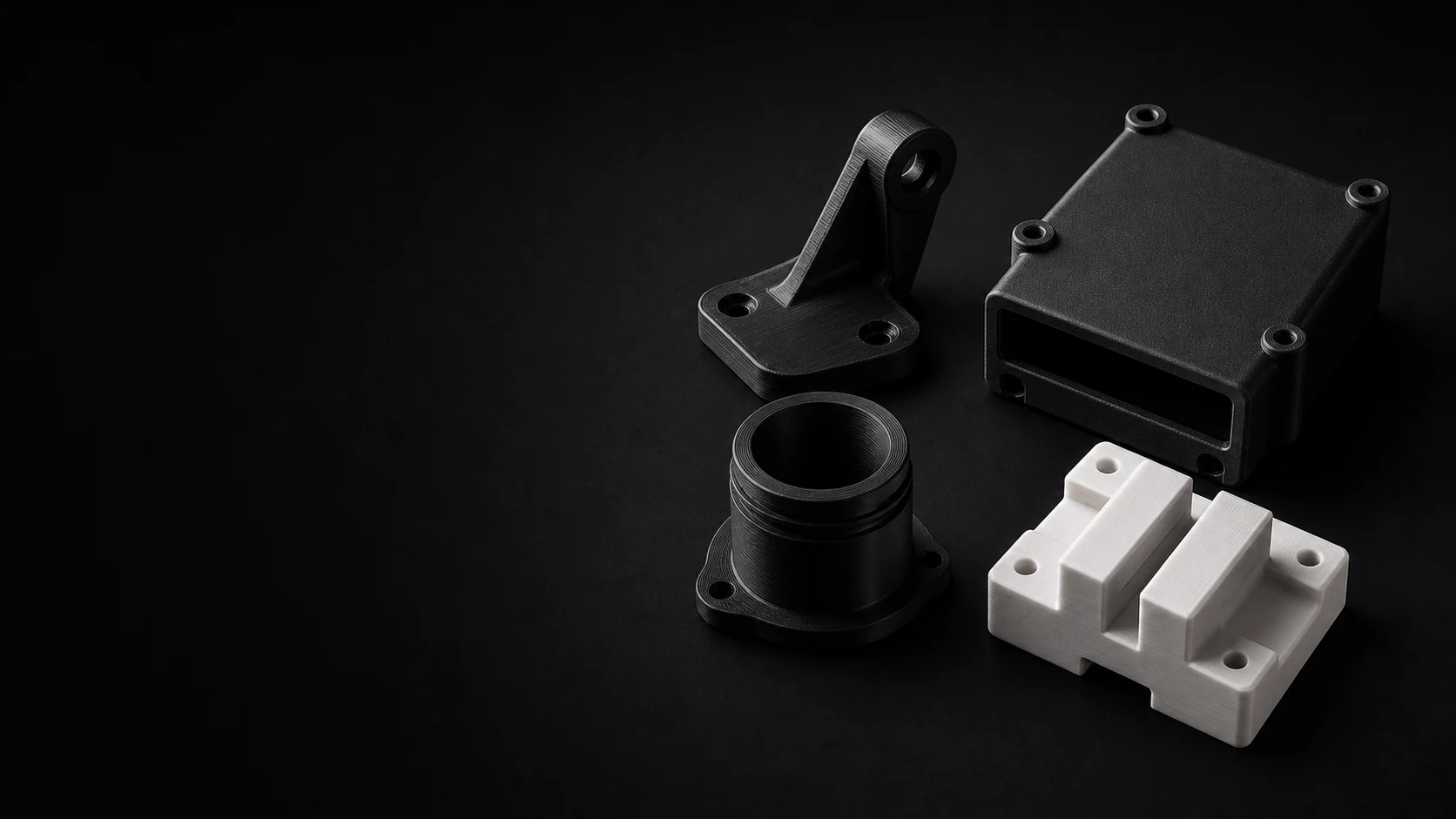
Choose PLA for economical prototypes, display parts, shop helpers, and general indoor use when heat and weather are not concerns.
- Toughness
- Moderate
- Heat
- Low
- Finish
- Clean, crisp detail
Uses, colors, and specifications for PLA
Why customers choose it
The economical choice for indoor prototypes, fit checks, organizers, and light-duty parts.
Best for
- Visual prototypes and concept models
- Indoor fixtures, jigs, organizers, and brackets
- Fast, economical parts when heat resistance is not critical
Choose something else when
Choose PETG if the part will face moisture, weather, drops, or frequent handling.
Available colors
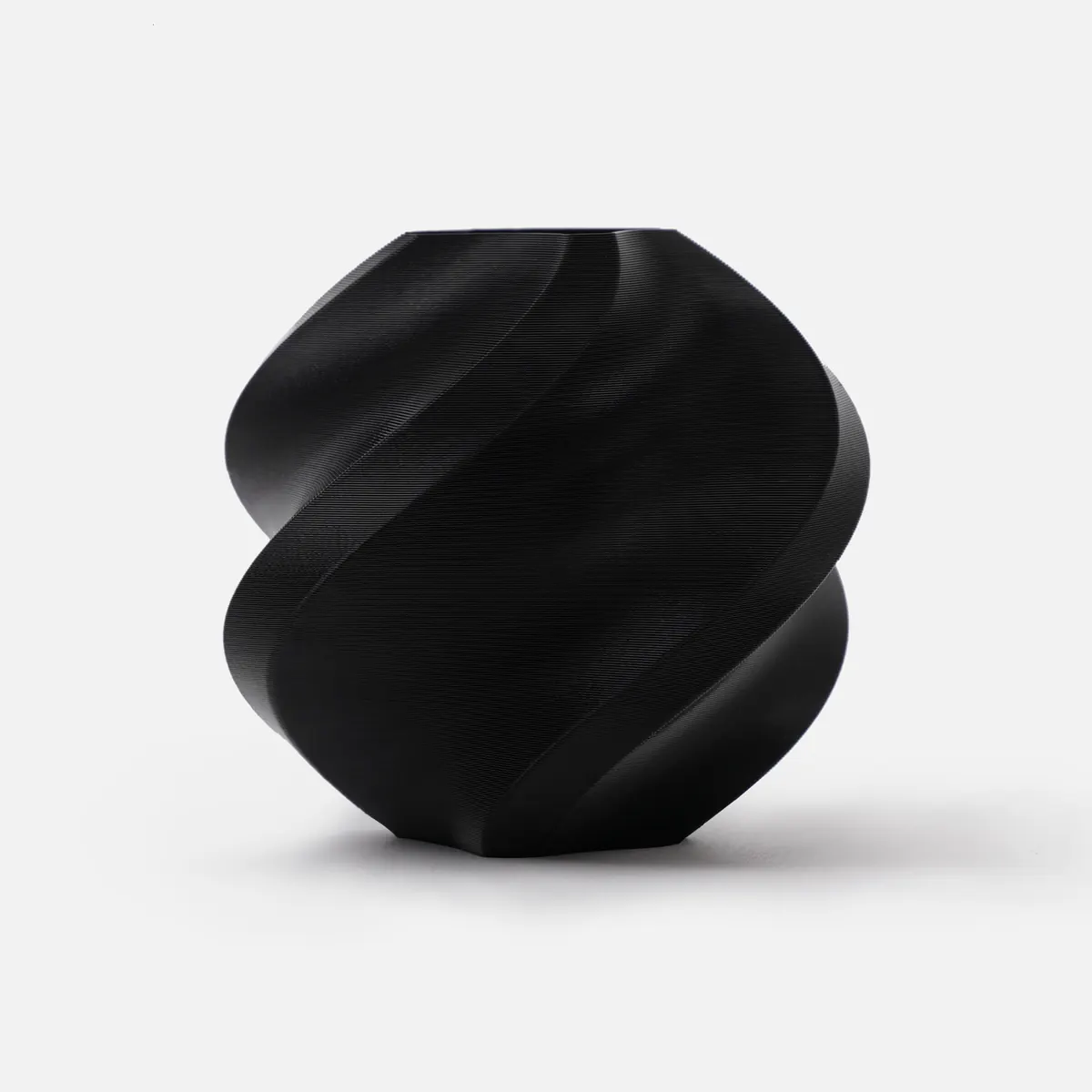 Black
Black
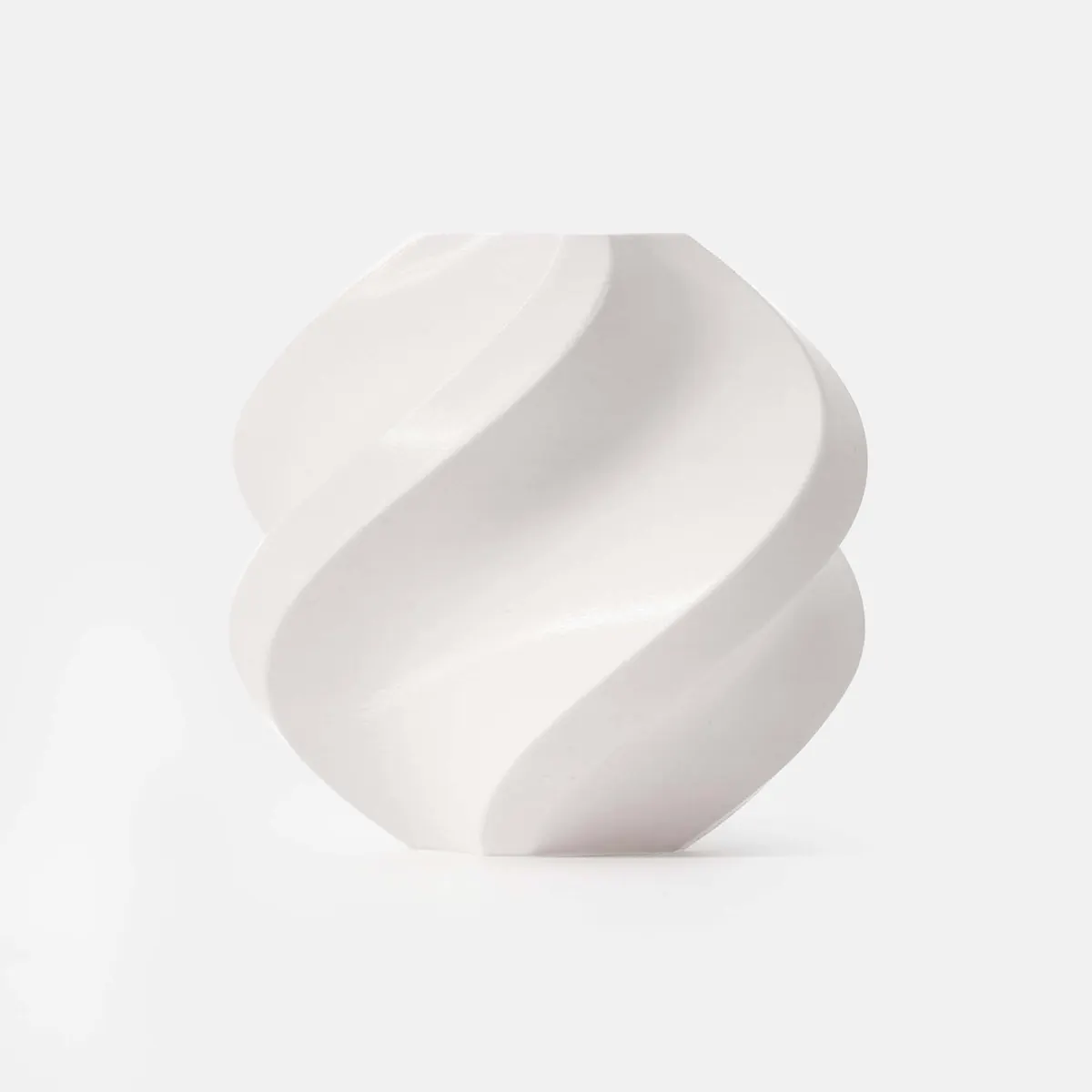 White
White
View performance data for technical buyers
| Part-performance property |
Manufacturer-reported value |
| Density |
1.21 g/cm3 |
| Tensile strength |
53.4 MPa |
| Elongation at break |
20.3% |
| Flexural strength |
81.8 MPa |
| Flexural modulus |
2740 MPa |
| Impact strength |
19.8 kJ/m2 (Izod notched) |
| Heat deflection temperature (HDT) |
53.8 C |
| Vicat softening temperature |
54 C |
These are typical values from standardized manufacturer testing. Printed-part results vary with geometry, load direction, wall thickness, infill, environment, and production method. Heat-deflection temperature is a comparison point—not a guaranteed continuous-use temperature.
Material ratings are selection guidance, not guaranteed part specifications. Ask for an application review when a requirement is safety-critical or must meet a published value.
Choose PETG when you need a more durable, water-resistant, and weather-resistant part than PLA without moving into carbon-fiber materials.
- Toughness
- High
- Heat
- Moderate
- Finish
- Slightly glossier, durable finish
Uses, colors, and specifications for PETG
Why customers choose it
A dependable default for functional parts that need more durability and weather resistance than PLA.
Best for
- Functional parts that need better toughness than PLA
- Outdoor or utility parts exposed to water and weather
- General-use brackets, mounts, covers, and enclosures
Choose something else when
Choose PLA for the lowest-cost indoor part, or PETG-CF when extra stiffness matters.
Available colors
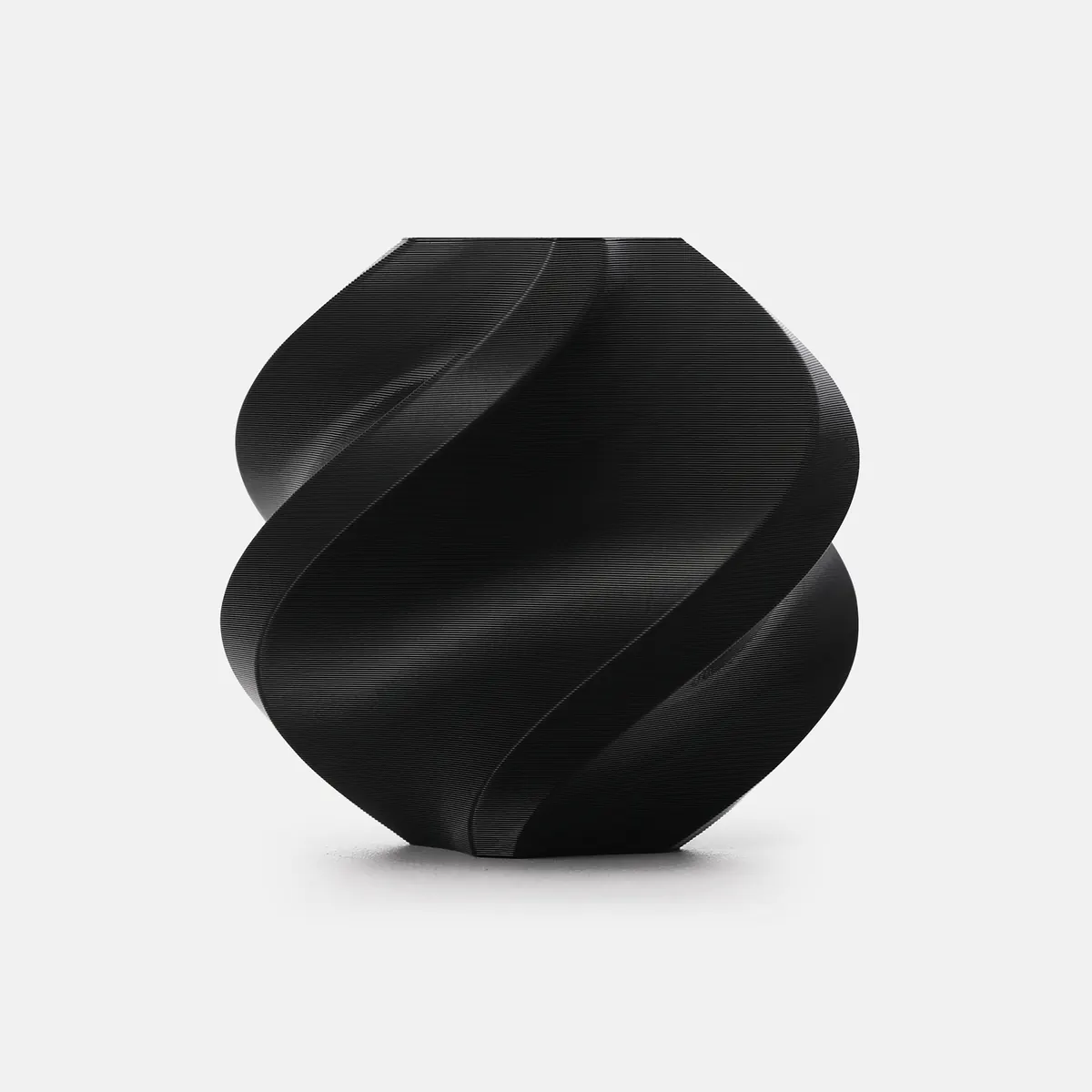 Black
Black
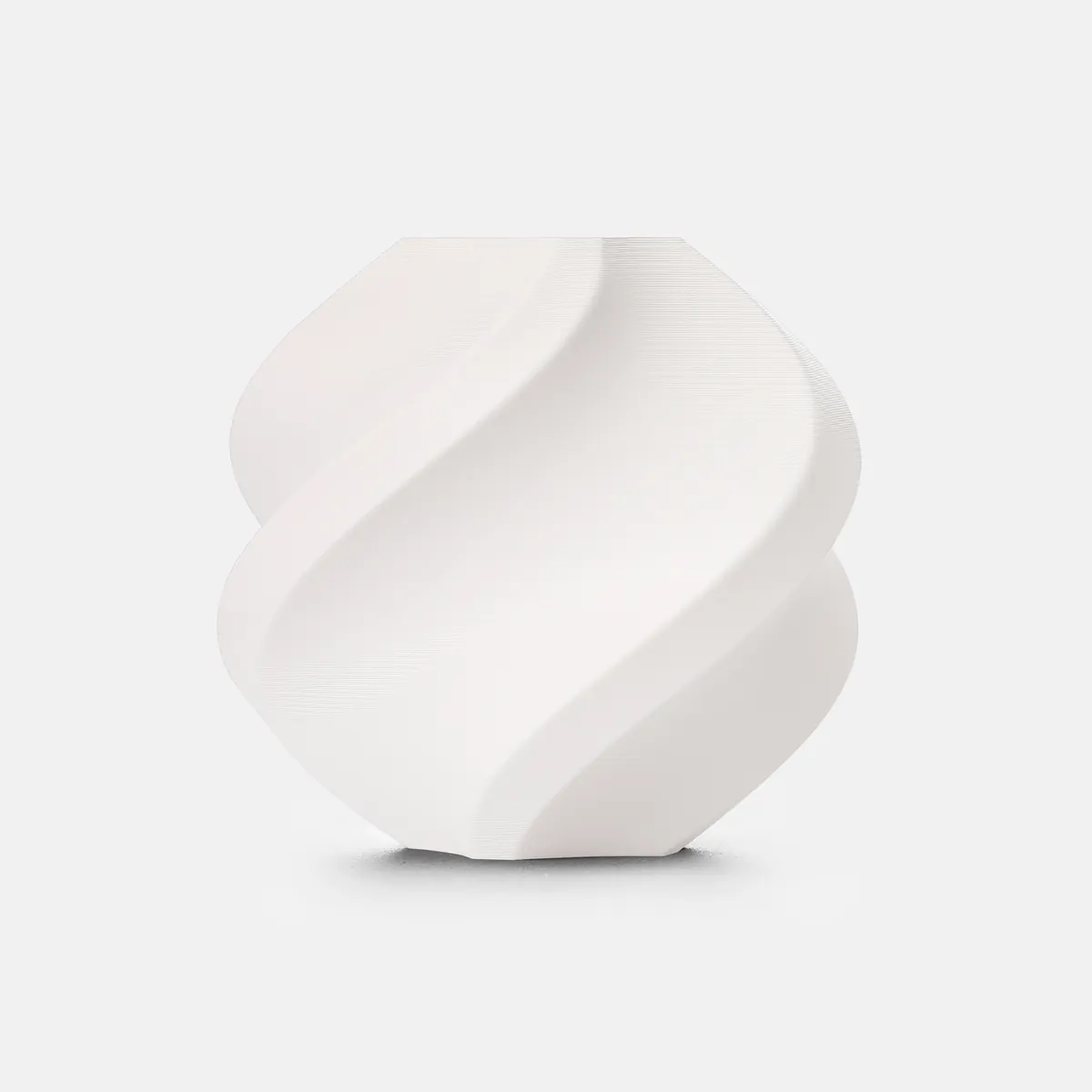 White
White
View performance data for technical buyers
| Part-performance property |
Manufacturer-reported value |
| Density |
1.29 g/cm3 |
| Tensile strength |
42 +/- 2 MPa |
| Elongation at break |
8.9% +/- 1.5% |
| Flexural strength |
68 +/- 2 MPa |
| Flexural modulus |
2097 +/- 173 MPa |
| Impact strength |
87.6 +/- 4.2 kJ/m2 |
| Heat deflection temperature (HDT) |
72 C |
| Vicat softening temperature |
70 C |
These are typical values from standardized manufacturer testing. Printed-part results vary with geometry, load direction, wall thickness, infill, environment, and production method. Heat-deflection temperature is a comparison point—not a guaranteed continuous-use temperature.
Material ratings are selection guidance, not guaranteed part specifications. Ask for an application review when a requirement is safety-critical or must meet a published value.
Choose PETG-CF when you want a stiffer, more dimensionally stable part with a matte carbon-fiber look and better wear resistance than standard PETG.
- Toughness
- Moderate to high
- Heat
- Moderate
- Finish
- Matte carbon-fiber texture
Uses, colors, and specifications for PETG-CF
Why customers choose it
A practical upgrade for rigid fixtures, brackets, and holders with a clean matte finish.
Best for
- Stiff brackets, jigs, tool holders, and structural parts
- Applications that benefit from better dimensional stability
- Parts where a matte, technical finish is desirable
Choose something else when
Choose standard PETG when toughness and lower price matter more than rigidity.
Available colors
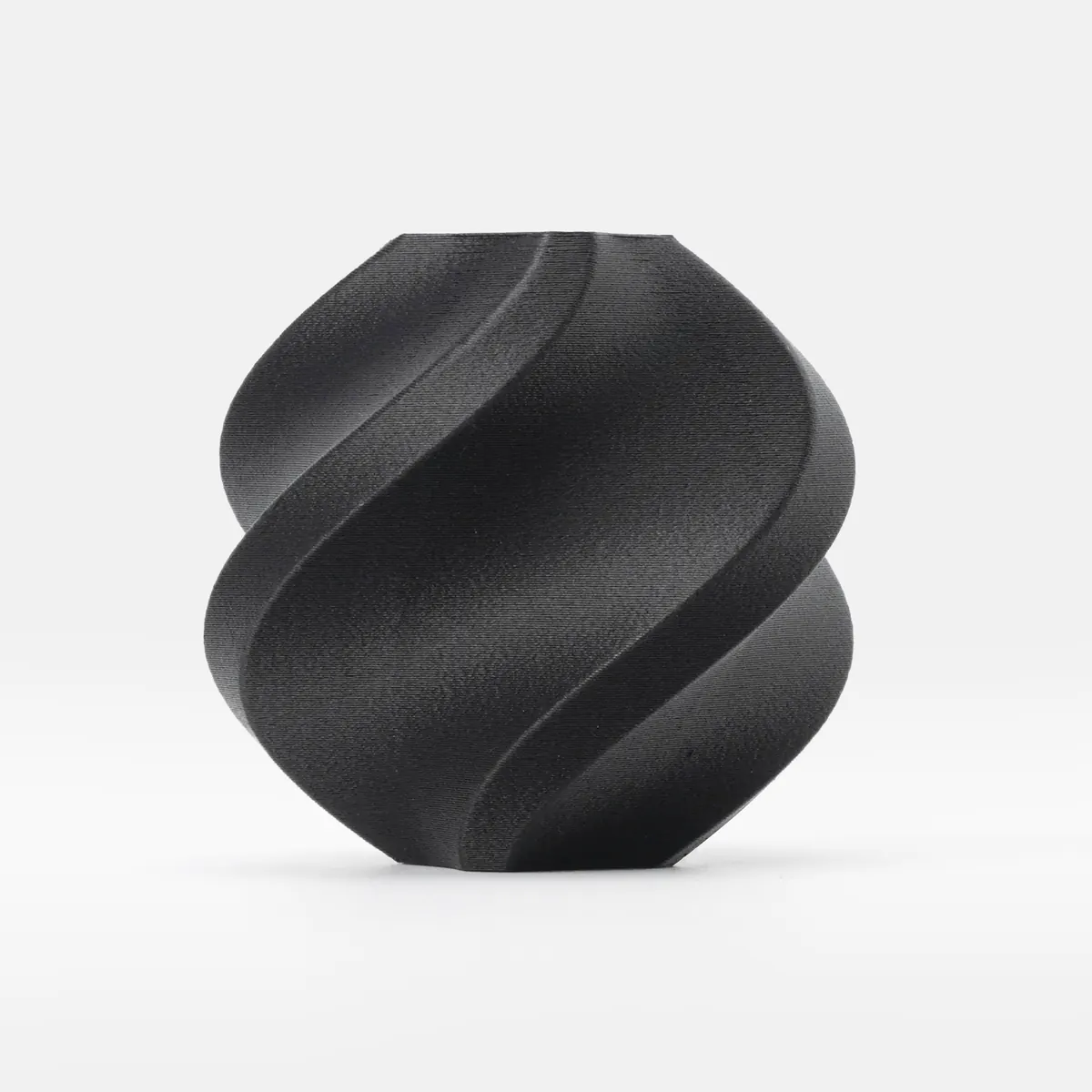 Black
Black
View performance data for technical buyers
| Part-performance property |
Manufacturer-reported value |
| Density |
1.29 g/cm3 |
| Tensile strength |
41 +/- 8 MPa |
| Elongation at break |
9.6% +/- 1.0% |
| Flexural strength |
75 +/- 2 MPa |
| Flexural modulus |
3040 +/- 21 MPa |
| Impact strength |
70.7 +/- 6.2 kJ/m2 |
| Heat deflection temperature (HDT) |
74 C |
| Vicat softening temperature |
83 C |
These are typical values from standardized manufacturer testing. Printed-part results vary with geometry, load direction, wall thickness, infill, environment, and production method. Heat-deflection temperature is a comparison point—not a guaranteed continuous-use temperature.
Material ratings are selection guidance, not guaranteed part specifications. Ask for an application review when a requirement is safety-critical or must meet a published value.
Choose PET-CF when stiffness, dimensional stability, and better heat performance justify a premium over PETG-based options.
- Toughness
- Moderate
- Heat
- High
- Finish
- Matte engineering finish
Uses, colors, and specifications for PET-CF
Why customers choose it
For dimensionally stable machine-side parts that need more stiffness and heat capability than PETG-based options.
Best for
- Engineering-style brackets, frames, and machine components
- Parts that benefit from low warping and strong dimensional stability
- Applications needing higher stiffness or better heat performance
Choose something else when
Choose PETG-CF unless the part genuinely needs the added stiffness or temperature capability.
Available colors
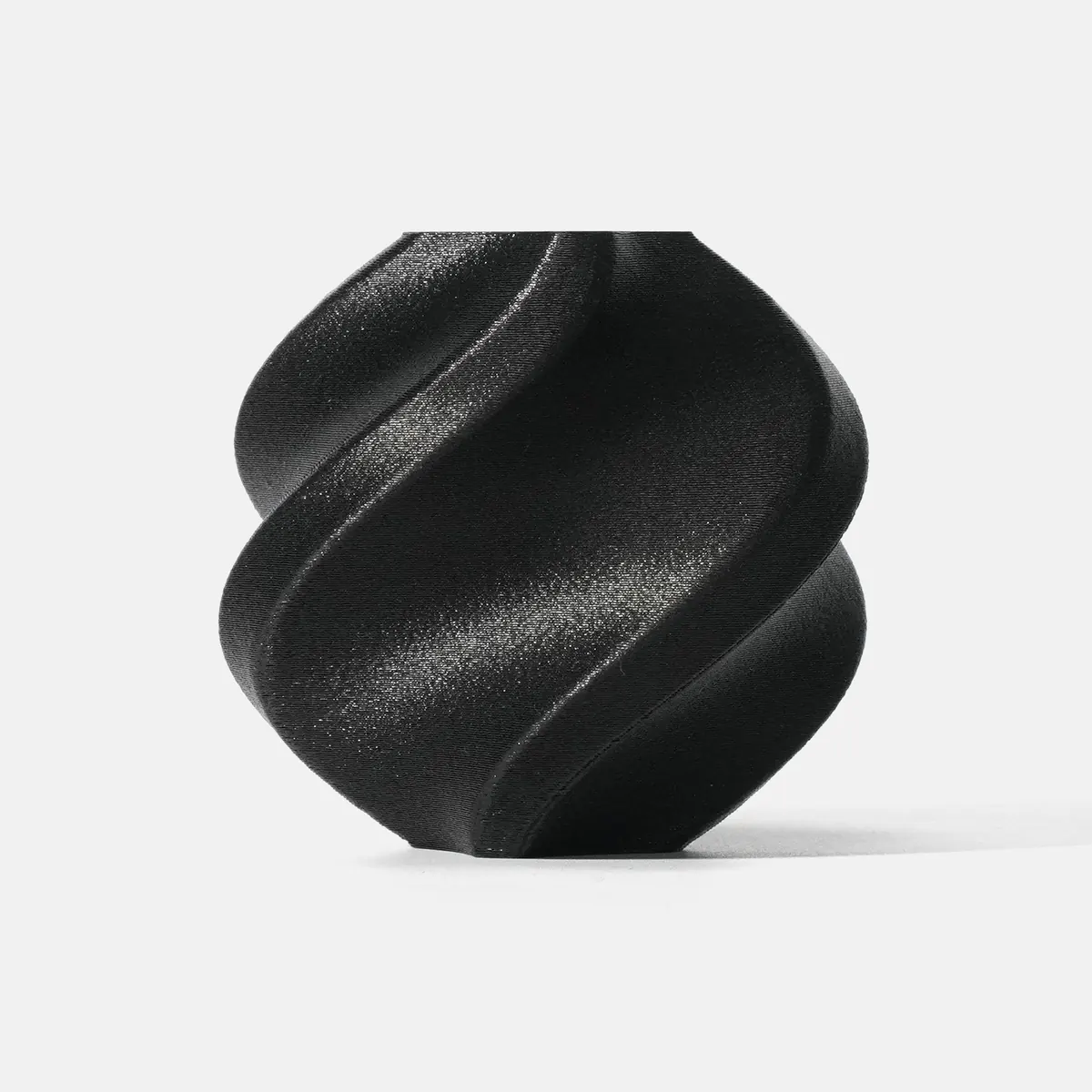 Black
Black
View performance data for technical buyers
| Part-performance property |
Manufacturer-reported value |
| Density |
1.30 g/cm3 |
| Composition |
PET with 15% carbon fiber |
| Tensile strength (XY) |
74 MPa unannealed; 73 MPa annealed |
| Tensile strength (Z) |
35 MPa unannealed |
| Young's modulus (XY) |
5950 MPa unannealed; 6700 MPa annealed |
| Young's modulus (Z) |
3400 MPa unannealed |
| Elongation at break (XY) |
2.5% unannealed; 1.5% annealed |
| Elongation at break (Z) |
1.15% unannealed |
| Charpy impact strength |
9 kJ/m2 unannealed; 4.8 kJ/m2 annealed |
| Flexural strength |
116 MPa unannealed; 115 MPa annealed |
| Flexural modulus |
5600 MPa unannealed; 5900 MPa annealed |
| Vicat softening temperature |
220 C |
| Glass transition temperature |
80 C |
| Izod impact |
36 kJ/m |
| HDT at 1.8 MPa |
76.6 C unannealed; 118 C annealed |
| HDT at 0.45 MPa |
86.7 C unannealed; 176 C annealed |
| Water absorption |
0.5% |
These are typical values from standardized manufacturer testing. Printed-part results vary with geometry, load direction, wall thickness, infill, environment, and production method. Heat-deflection temperature is a comparison point—not a guaranteed continuous-use temperature.
Material ratings are selection guidance, not guaranteed part specifications. Ask for an application review when a requirement is safety-critical or must meet a published value.
Choose ASA for functional parts that will live outdoors or face sustained sunlight, rain, changing weather, and warm environments.
- Toughness
- High
- Heat
- High
- Finish
- Smooth satin-matte finish
Uses, colors, and specifications for ASA
Why customers choose it
For outdoor brackets, housings, mounts, and equipment parts that must tolerate sunlight, weather, and warm conditions.
Best for
- Outdoor brackets, mounts, covers, and equipment parts
- Automotive exterior accessories and sun-exposed components
- Housings and fixtures that need weather and UV resistance
Choose something else when
Choose PETG for ordinary weather exposure at a lower price, or a reinforced material when rigidity is the main requirement.
Available colors
Black
View performance data for technical buyers
| Part-performance property |
Manufacturer-reported value |
| Density |
1.09 g/cm3 |
| Tensile strength (XY) |
35 +/- 2 MPa |
| Elongation at break (XY) |
9.4% +/- 2.3% |
| Flexural strength |
65 +/- 4 MPa |
| Flexural modulus |
1905 +/- 131 MPa |
| Impact strength |
40.1 +/- 3.7 kJ/m2 (XY) |
| HDT at 0.45 MPa |
99 C |
| Vicat softening temperature |
102 C |
These are typical values from standardized manufacturer testing. Printed-part results vary with geometry, load direction, wall thickness, infill, environment, and production method. Heat-deflection temperature is a comparison point—not a guaranteed continuous-use temperature.
Material ratings are selection guidance, not guaranteed part specifications. Ask for an application review when a requirement is safety-critical or must meet a published value.
Choose PA6-CF for rigid, load-bearing engineering parts that need carbon-fiber reinforcement, wear resistance, and the highest advertised heat performance in this material lineup.
- Toughness
- High
- Heat
- Extreme
- Finish
- Frosted carbon-fiber matte
Uses, colors, and specifications for PA6-CF
Why customers choose it
For rigid, load-bearing machine parts used around sustained heat, wear, or demanding service conditions.
Best for
- High-stiffness brackets, gears, fixtures, and machine components
- Parts used near sustained heat after the appropriate annealing process
- Industrial components that benefit from a low-friction matte finish
Choose something else when
Choose PET-CF for a more economical rigid part, or PA12-CF for wet, oily, or chemical exposure.
Available colors
Black
View performance data for technical buyers
| Part-performance property |
Manufacturer-reported value |
| Composition |
80% PA nylon, 20% carbon fiber |
| Density |
1.12 g/cm3 |
| Tensile strength (XY) |
112 +/- 10 MPa |
| Elongation at break (XY) |
12% +/- 3% |
| Flexural strength |
192 +/- 20 MPa |
| Flexural modulus |
8600 +/- 400 MPa |
| Impact strength |
6.5 +/- 2 kJ/m2 (notched Izod, XY) |
| HDT at 0.45 MPa |
203 +/- 3 C |
These are typical values from standardized manufacturer testing. Printed-part results vary with geometry, load direction, wall thickness, infill, environment, and production method. Heat-deflection temperature is a comparison point—not a guaranteed continuous-use temperature.
Material ratings are selection guidance, not guaranteed part specifications. Ask for an application review when a requirement is safety-critical or must meet a published value.
Choose PA12-CF for tough moving parts and automotive or shop components that need lower moisture sensitivity, strong wear resistance, and resistance to grease, fuel, and solvents.
- Toughness
- Very high
- Heat
- Very high
- Finish
- Low-friction carbon-fiber matte
Uses, colors, and specifications for PA12-CF
Why customers choose it
For durable, lightweight parts exposed to sliding wear, moisture, grease, fuel, or shop chemicals.
Best for
- Gears, bearings, sliding mechanisms, and wear surfaces
- Automotive or shop parts exposed to grease, fuel, or solvents
- Lightweight drone, bicycle, and portable equipment components
Choose something else when
Choose PA6-CF when maximum rigidity and heat are more important than environmental resistance.
Available colors
Black
View performance data for technical buyers
| Part-performance property |
Manufacturer-reported value |
| Density |
1.08 g/cm3 |
| Composition |
80% PA nylon, 20% carbon fiber |
| Tensile strength (XY) |
86 +/- 6 MPa |
| Elongation at break (XY) |
13.7% +/- 2.5% |
| Flexural strength |
160 +/- 30 MPa |
| Flexural modulus |
5800 +/- 300 MPa |
| Impact strength |
11.3 +/- 2.5 kJ/m2 (XY) |
| Heat deflection temperature (HDT) |
175 +/- 3 C |
These are typical values from standardized manufacturer testing. Printed-part results vary with geometry, load direction, wall thickness, infill, environment, and production method. Heat-deflection temperature is a comparison point—not a guaranteed continuous-use temperature.
Material ratings are selection guidance, not guaranteed part specifications. Ask for an application review when a requirement is safety-critical or must meet a published value.
Choose Easy PA when you need nylon toughness, abrasion resistance, and repeated impact performance without paying for fiber-reinforced rigidity.
- Toughness
- Very high
- Heat
- High
- Finish
- Smooth engineering finish
Uses, colors, and specifications for Easy PA
Why customers choose it
For tough functional parts that need to absorb impact, resist abrasion, and hold together under repeated use.
Best for
- Impact-resistant gears, bearings, housings, and protective parts
- Protective and moving parts exposed to repeated handling
- Dynamic components that need toughness under repeated use
Choose something else when
Choose PETG when ordinary functional durability is enough, or a fiber-reinforced nylon when rigidity matters more.
Available colors
Black
View performance data for technical buyers
| Part-performance property |
Manufacturer-reported value |
| Composition |
Nylon 6/66 copolymer |
| Density |
1.10 g/cm3 |
| Tensile strength |
61 +/- 6 MPa |
| Elongation at break |
15% +/- 3% |
| Flexural strength |
91 +/- 5 MPa |
| Flexural modulus |
2314 +/- 250 MPa |
| Impact strength |
11 +/- 3 kJ/m2 (notched Izod, XY) |
| Heat deflection temperature (HDT) |
119 +/- 3 C |
| Vicat softening temperature |
135 C |
These are typical values from standardized manufacturer testing. Printed-part results vary with geometry, load direction, wall thickness, infill, environment, and production method. Heat-deflection temperature is a comparison point—not a guaranteed continuous-use temperature.
Material ratings are selection guidance, not guaranteed part specifications. Ask for an application review when a requirement is safety-critical or must meet a published value.
Choose PA6-GF for glass-fiber-reinforced nylon parts that need high heat capability, chemical resistance, impact performance, and strong dimensional stability.
- Toughness
- High
- Heat
- Extreme
- Finish
- Smooth glass-fiber engineering finish
Uses, colors, and specifications for PA6-GF
Why customers choose it
For rigid industrial parts exposed to heat, cleaners, fuels, or demanding shop environments.
Best for
- Automotive brackets, electrical housings, and industrial molds
- Chemical-system parts exposed to fuels or harsh cleaners
- Functional jigs and components that need a smooth rigid finish
Choose something else when
Choose PA6-CF when maximum stiffness is the priority, or PET-CF when the environment is less severe.
Available colors
Black
View performance data for technical buyers
| Part-performance property |
Manufacturer-reported value |
| Composition |
75% PA nylon, 25% glass fiber |
| Density |
1.269 g/cm3 |
| Tensile strength |
89 +/- 8 MPa |
| Elongation at break |
12.5% +/- 3% |
| Flexural strength |
176 +/- 8 MPa |
| Impact strength |
10.5 +/- 2.5 kJ/m2 (notched Izod) |
| Heat deflection temperature (HDT) |
205.2 +/- 3 C |
These are typical values from standardized manufacturer testing. Printed-part results vary with geometry, load direction, wall thickness, infill, environment, and production method. Heat-deflection temperature is a comparison point—not a guaranteed continuous-use temperature.
Material ratings are selection guidance, not guaranteed part specifications. Ask for an application review when a requirement is safety-critical or must meet a published value.
Choose PC-ABS when you need the strength and thermal stability of polycarbonate with the impact resistance, finish quality, and post-processing advantages of ABS.
- Toughness
- Very high
- Heat
- High
- Finish
- Smooth, paint-ready finish
Uses, colors, and specifications for PC-ABS
Why customers choose it
For tough housings, guards, handles, and finished parts that may be painted or otherwise post-processed.
Best for
- Automotive trim, robot parts, tool handles, and protective housings
- Painted, plated, or display-grade engineering models
- Impact-loaded parts used in warm environments
Choose something else when
Choose PETG for a lower-cost utility part, or PET-CF when stiffness matters more than impact resistance.
Available colors
Black
View performance data for technical buyers
| Part-performance property |
Manufacturer-reported value |
| Composition |
Polycarbonate and ABS hybrid |
| Density |
1.081 g/cm3 |
| Tensile strength |
38 +/- 3 MPa |
| Elongation at break |
8% +/- 2% |
| Flexural strength |
70 +/- 3 MPa |
| Flexural modulus |
2300 +/- 200 MPa |
| Impact strength |
15 +/- 3 kJ/m2 (notched Izod) |
| Heat deflection temperature (HDT) |
102 +/- 2 C |
These are typical values from standardized manufacturer testing. Printed-part results vary with geometry, load direction, wall thickness, infill, environment, and production method. Heat-deflection temperature is a comparison point—not a guaranteed continuous-use temperature.
Material ratings are selection guidance, not guaranteed part specifications. Ask for an application review when a requirement is safety-critical or must meet a published value.