
If so, design around the actual load path and not just the CAD shape.
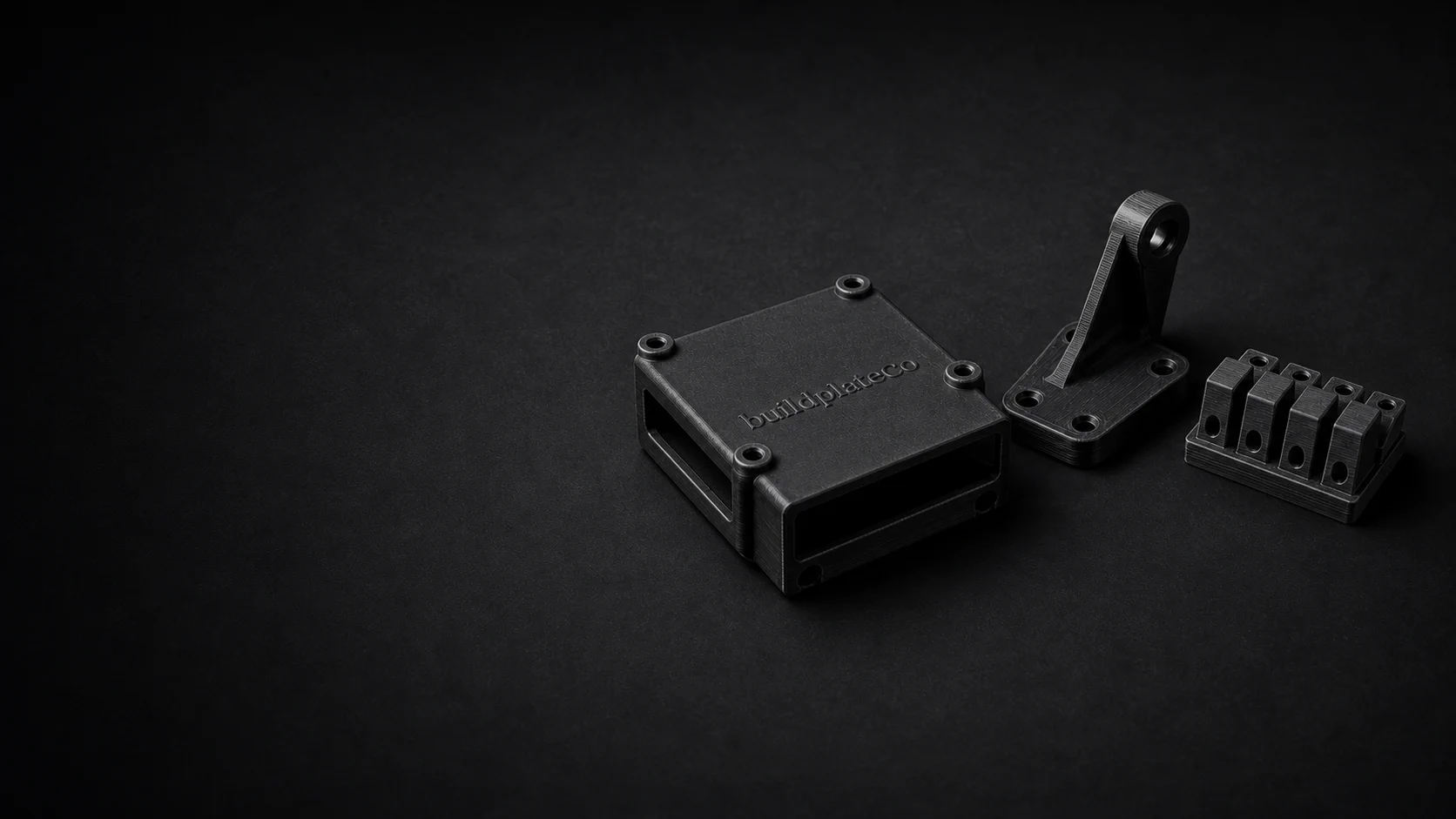
Functional 3D printed parts
Functional printed parts for real-world use.
A functional part has to do more than look correct. Brackets, covers, jigs, holders, adapters, and small components need geometry and materials that match the real job.
Print-ready STL, STEP, or STP files. CAD repair or model creation is paid work and priced before it begins.
01
Material matters
Functional parts usually need a more deliberate material choice than visual prototypes.
02
Geometry matters too
Wall thickness, fillets, ribs, and load direction often matter more than the material name.
03
Printed part tradeoffs
Functional can still mean visible layer lines, tolerance limits, and anisotropic strength.
04
Fast service
Even with those realities, 3D printing can be the fastest practical path to a useful part.
What functional really means
How to think about a real-use custom part
These conditions can change the correct material choice quickly.
If it mates to something else, clearances and hole sizing deserve attention.
How BuildplateCo helps
What the service does beyond just quoting
The material flow helps beginners choose without requiring deep process knowledge.
Capabilities and material pages keep the process limits visible before ordering.
Accounts, saved quotes, and order history make it easier to reorder useful parts.
Design priorities
What makes a printed part more functional
A functional part does not have to be overbuilt, but it does need its geometry and material to match the job. Small design choices often decide whether the part feels reliable in use.
Fillets, ribs, thicker bosses, and better transitions help more than simply choosing the strongest material name.
Holes, slots, tabs, mating faces, and press-fit features may need clearance so the printed part works after real-world variation.
Layer direction, overhangs, surface finish, and support scars can affect strength and assembly.
FAQ
Common questions before ordering.
Are printed parts strong enough for real use?
Often yes, but strength depends on geometry, orientation, and material choice. A functional part deserves more thought than a simple display model.
What material should I start with for a functional part?
PETG is usually the safest general-purpose starting point, then move into carbon-filled options when stiffness or heat matter more.
What makes a functional print different from a prototype?
A prototype may only need to prove shape or fit. A functional print also needs to survive handling, load, temperature, clearance, and repeat use.
Should I mention how the part will be used?
Yes. Use-case notes about load, heat, outdoor exposure, fasteners, and mating parts make material and design decisions much more reliable.
Upload the file.
We’ll check the practical limits.
Review pricing before checkout, or request a paid part review when the design still needs work.