
Choose PET-CF when stiffness, dimensional stability, and better heat performance justify a premium over PETG-based options.
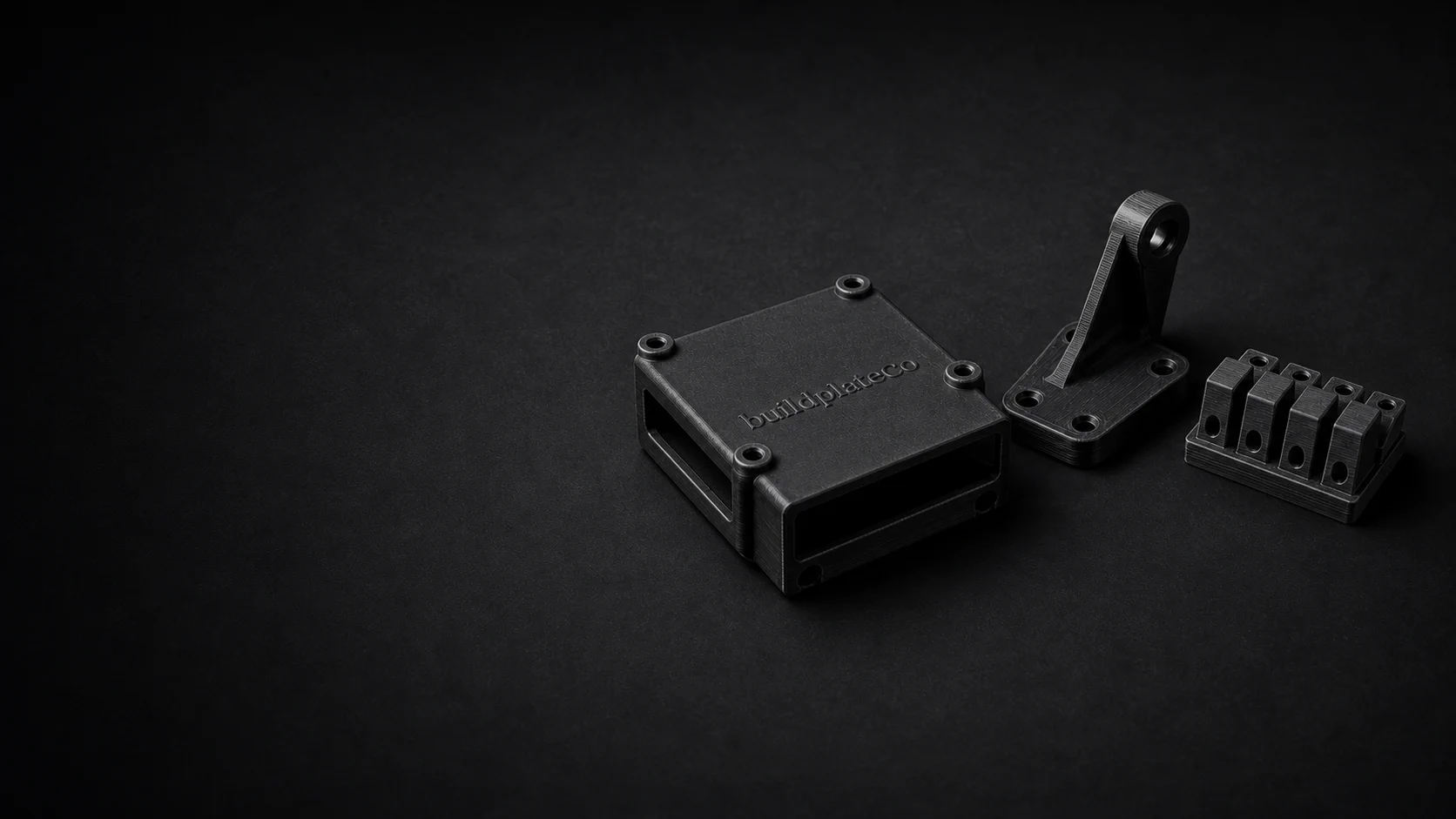
PET-CF 3D printing service
Engineering PET-CF parts for demanding use.
PET-CF is the most technical material in this service mix. Use it when stiffness, dimensional stability, and stronger engineering performance matter more than easy printing behavior.
Print-ready STL, STEP, or STP files. CAD repair or model creation is paid work and priced before it begins.
01
Best for
Best for higher-stiffness engineering parts and more heat
02
Heat profile
High
03
Finish
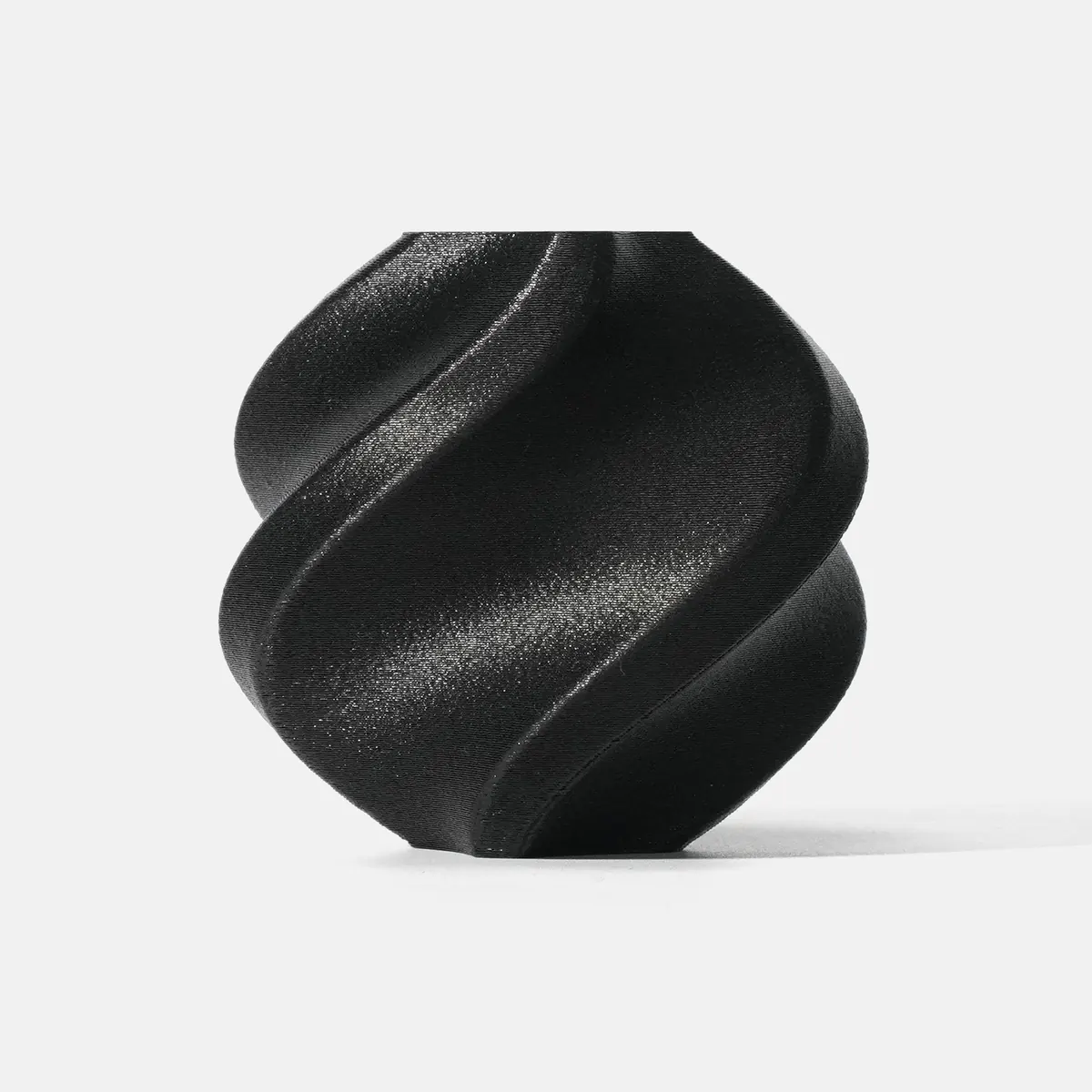
Matte engineering finish
04
Available colors
Black
Material snapshot
Is PET-CF right for your part?
Choose PET-CF when stiffness, dimensional stability, and better heat performance justify a premium over PETG-based options.
Best starting point
Best for higher-stiffness engineering parts and more heat
For dimensionally stable machine-side parts that need more stiffness and heat capability than PETG-based options.
- Expected finish
- Matte engineering finish
- Relative price
- Premium
- Choose another material when
- Choose PETG-CF unless the part genuinely needs the added stiffness or temperature capability.
Available colors
Review technical material properties
| Part-performance property | Manufacturer-reported value |
|---|---|
| Density | 1.30 g/cm3 |
| Composition | PET with 15% carbon fiber |
| Tensile strength (XY) | 74 MPa unannealed; 73 MPa annealed |
| Tensile strength (Z) | 35 MPa unannealed |
| Young's modulus (XY) | 5950 MPa unannealed; 6700 MPa annealed |
| Young's modulus (Z) | 3400 MPa unannealed |
| Elongation at break (XY) | 2.5% unannealed; 1.5% annealed |
| Elongation at break (Z) | 1.15% unannealed |
| Charpy impact strength | 9 kJ/m2 unannealed; 4.8 kJ/m2 annealed |
| Flexural strength | 116 MPa unannealed; 115 MPa annealed |
| Flexural modulus | 5600 MPa unannealed; 5900 MPa annealed |
| Vicat softening temperature | 220 C |
| Glass transition temperature | 80 C |
| Izod impact | 36 kJ/m |
| HDT at 1.8 MPa | 76.6 C unannealed; 118 C annealed |
| HDT at 0.45 MPa | 86.7 C unannealed; 176 C annealed |
| Water absorption | 0.5% |
These are typical material values from manufacturer testing, usually on standardized specimens. Printed-part results vary with geometry, load direction, wall thickness, infill, environment, and production method. HDT is a comparison point—not a guaranteed continuous-use temperature.
Have a specific temperature, load, chemical, wear, or compliance requirement? Ask for an application review before ordering so the recommendation accounts for the actual part—not only a filament datasheet.
Best fit
When to choose PET-CF
Engineering-style brackets, frames, and machine components, Parts that benefit from low warping and strong dimensional stability
Parts that need to flex or absorb impact repeatedly, Designs that cannot tolerate the extra brittleness of carbon-filled material
FAQ
Common questions before ordering.
When should I choose PET-CF?
Choose PET-CF when stiffness, dimensional stability, and better heat performance justify a premium over PETG-based options.
What colors are currently available in PET-CF?
Current offered colors: Black.
Upload the file.
We’ll check the practical limits.
Review pricing before checkout, or request a paid part review when the design still needs work.