
Decide what the part must do: cover, hold, space, adapt, clip, guard, or locate.
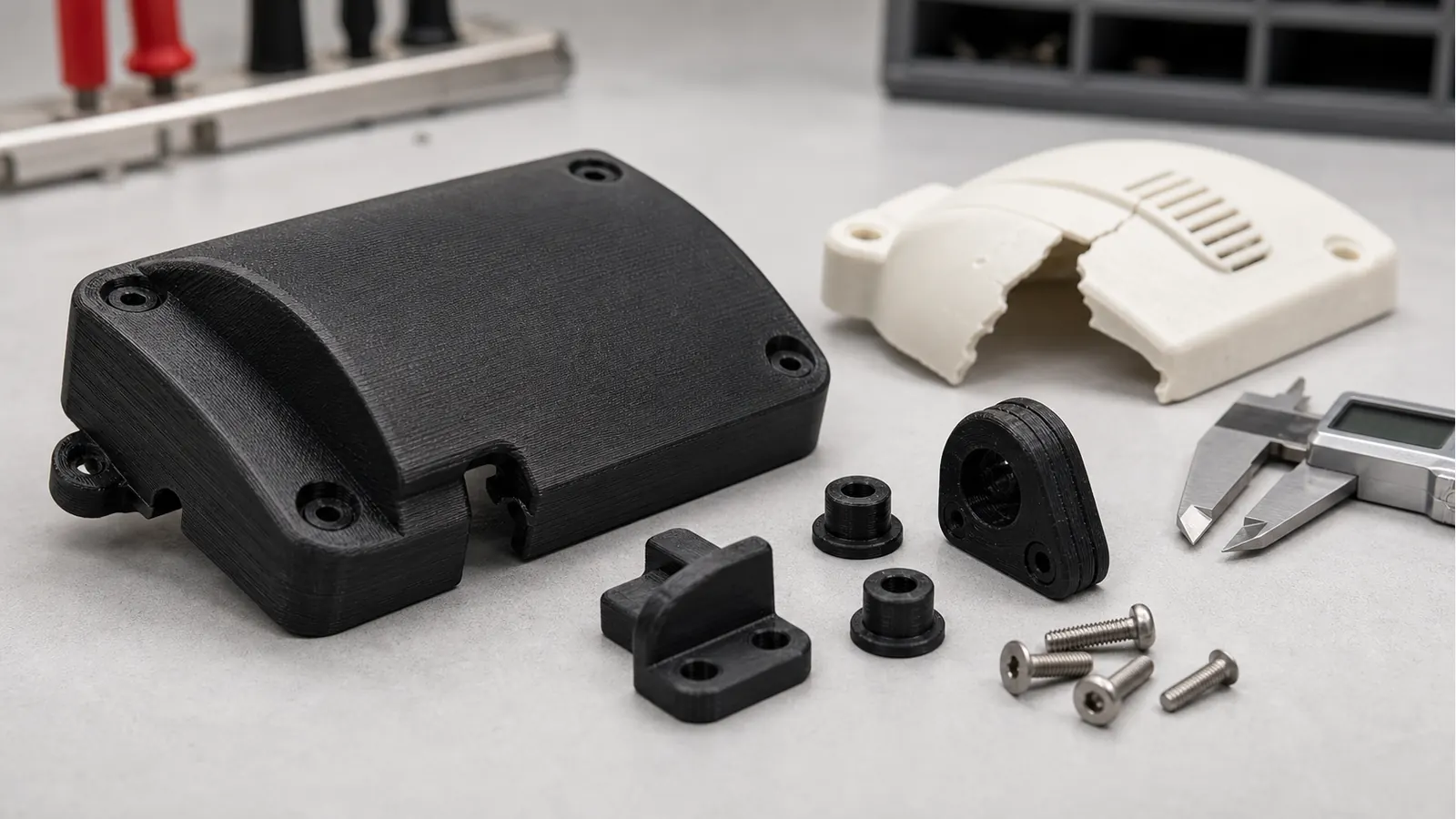
Replacement plastic parts
Replace the plastic part you can’t buy.
Sometimes the need is simple: a plastic part broke, the original is unavailable, and you need a practical way to make a working replacement.
Print-ready STL, STEP, or STP files. CAD repair or model creation is paid work and priced before it begins.
Replacement-part work usually comes down to fit, mounting details, material choice, and whether the original geometry can be modeled or supplied.
01
Best for
Covers, guards, spacers, adapters, handles, brackets, and simple housings.
02
Good quantities
One-off parts and small batches where tooling or sourcing would be too slow.
03
Starting point
STL or STEP files are fastest; photos and dimensions can start a review.
04
Watch-outs
Heat, safety-critical loads, snap clips, and exact fits need extra care.
Measure hole spacing, mating faces, thickness, tabs, clips, and clearance features.
Upload a file for quoting, or send photos and dimensions if the part needs review first.
Good candidates
Replacement plastic parts that often make sense to print
Custom 3D printing is strongest when the part is useful, low-volume, and specific to a real fit problem. The goal is not to recreate every molded detail; it is to make a replacement that works for the actual job.
Simple protective covers, panels, bezels, guards, caps, and enclosure pieces.
Parts that restore spacing, bridge old hardware, or adapt one mounting pattern to another.
Low-volume mounts, clips, supports, and utility parts that are hard to buy off the shelf.
Fit and repair detail
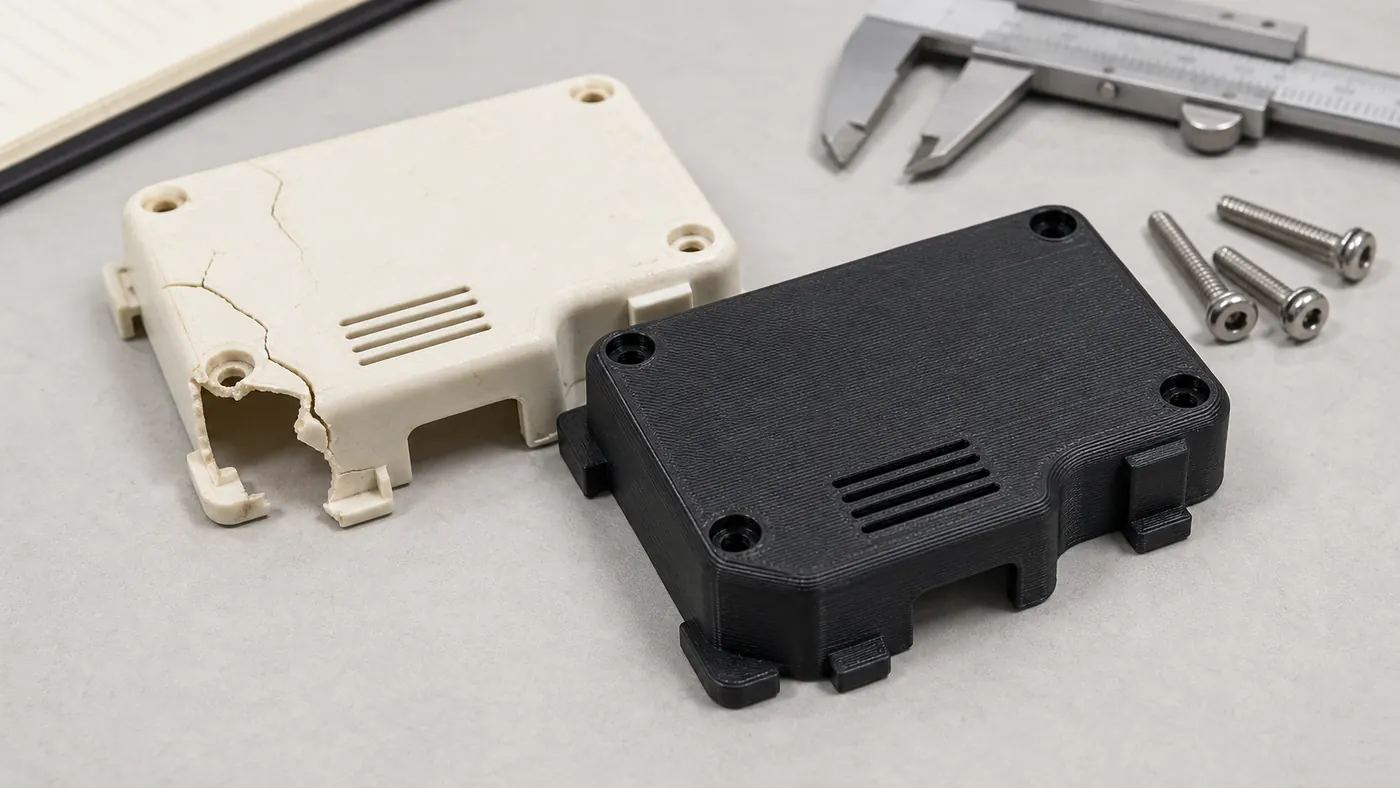
Compare the broken part to the replacement goal
A replacement part usually fails or succeeds at the mating details: screw holes, clips, bosses, tabs, pockets, and the surfaces that touch the original assembly. Those details matter more than making the outside shape look identical.
- 01Overall length, width, height, and wall thickness
- 02Hole spacing, screw size, washer clearance, and countersinks
- 03Clip/tab geometry, mating pockets, and surfaces that touch other parts
- 04Heat, outdoor exposure, vibration, load, and repeated handling
What may need review
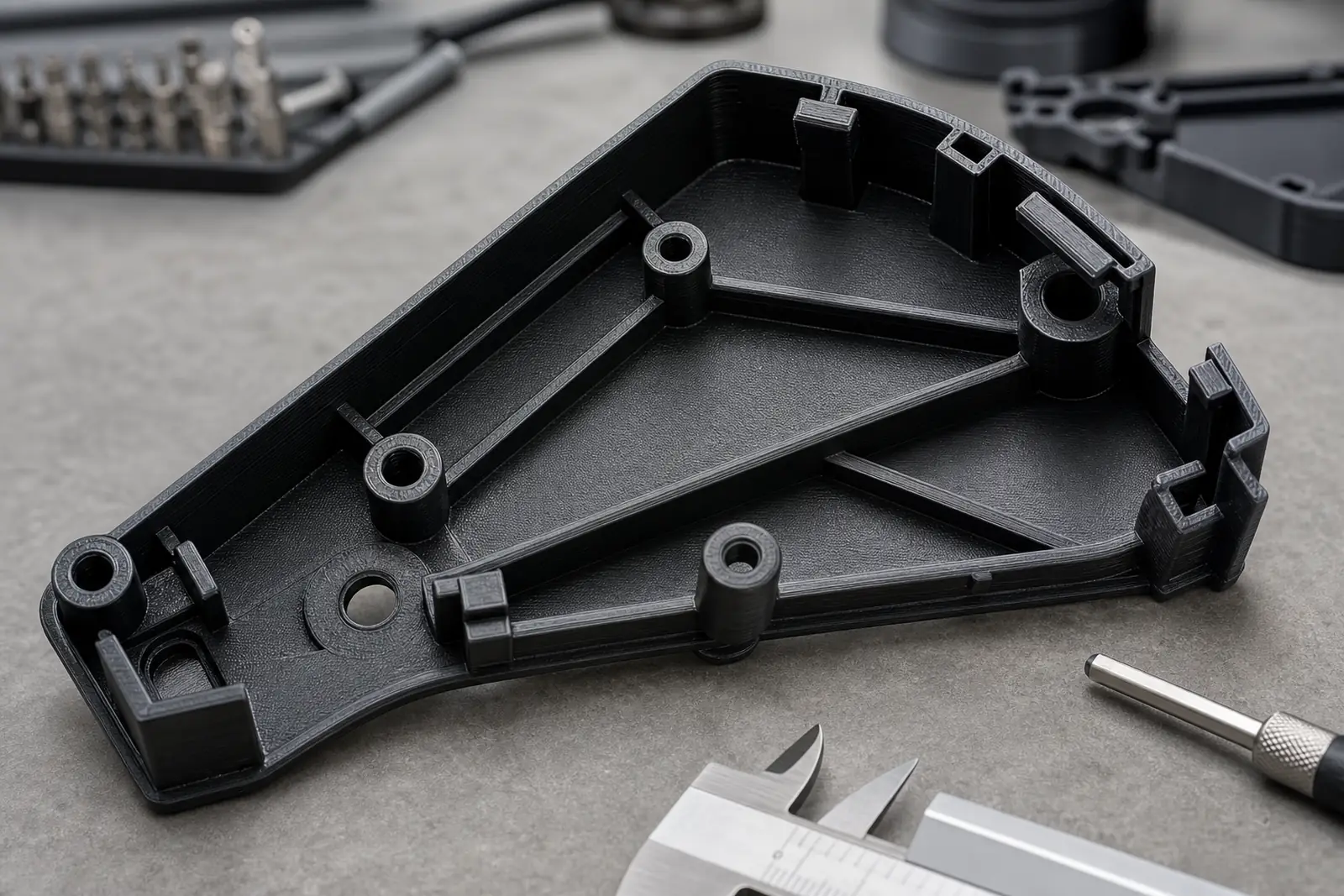
Cases where a replacement part needs more caution
Some repair parts are still possible, but they deserve a closer look before checkout. If the part is safety-critical, carries a serious load, snaps repeatedly, or lives in heat, send details before assuming it is a straightforward print.
Hot cars, direct sun, motors, and weather exposure can change the right material.
Printed clips may need geometry changes, material changes, or iteration to work well.
Parts that protect people, carry major loads, or affect vehicle/equipment safety may not be a fit.
Before ordering
Quick decision guide.
- Strong use
- A low-volume plastic cover, spacer, adapter, holder, or guard with measurable fit features.
- Needs care
- Snap fits, high heat, outdoor exposure, vibration, moving wear surfaces, or serious loads.
- Send with the file
- STL/STEP if available, plus photos, dimensions, hole spacing, material/environment notes, and quantity.
FAQ
Common questions before ordering.
Can 3D printing replace every broken plastic part?
No. It is best for practical, low-volume parts where the geometry and material requirements fit FDM printing.
What if I only have the broken part and no CAD file?
Use the help path to send photos, measurements, and use-case notes. A printable model still has to exist, but photos and dimensions can start the review.
Can you make discontinued plastic parts?
Often, if the part can be modeled or supplied as a file and the material/use case is appropriate for 3D printing.
Upload the file.
We’ll check the practical limits.
Review pricing before checkout, or request a scope review when the design still needs work. Any CAD work is separately priced before it begins.