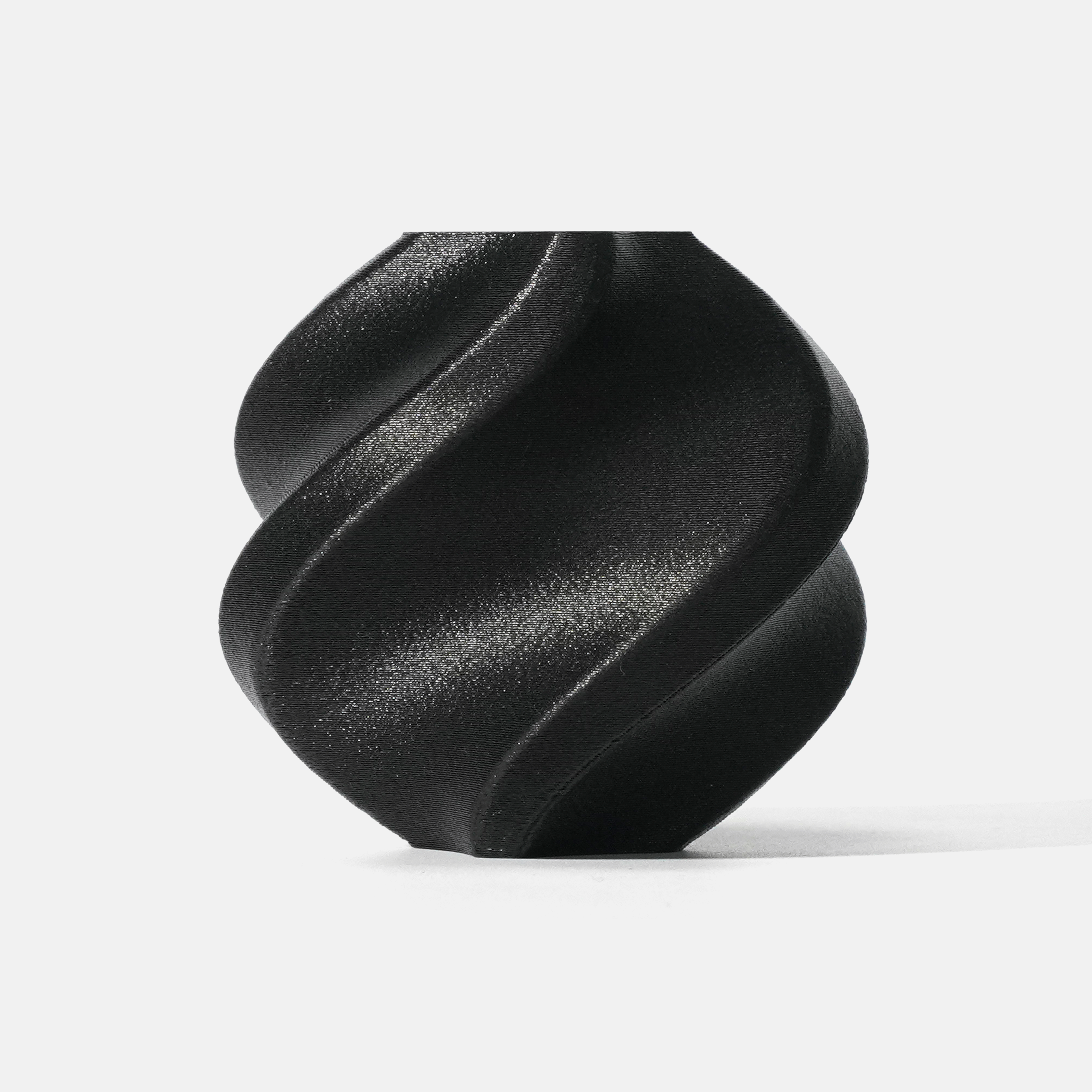
3D printing materials

Choose the right material for your custom 3D printed part.

This guide helps buyers who just want a recommendation and technical customers who need real material data. Use it to choose the best option for prototypes, brackets, housings, fixtures, and tougher functional parts.

1
Need the simplest choice? Start with PLA for indoor prototypes and general parts
2
Need more durability? Move to PETG for tougher everyday functional parts
3
Need stiffness or more heat? Compare the carbon-filled options below

Material selection

What matters most for the part you want made?

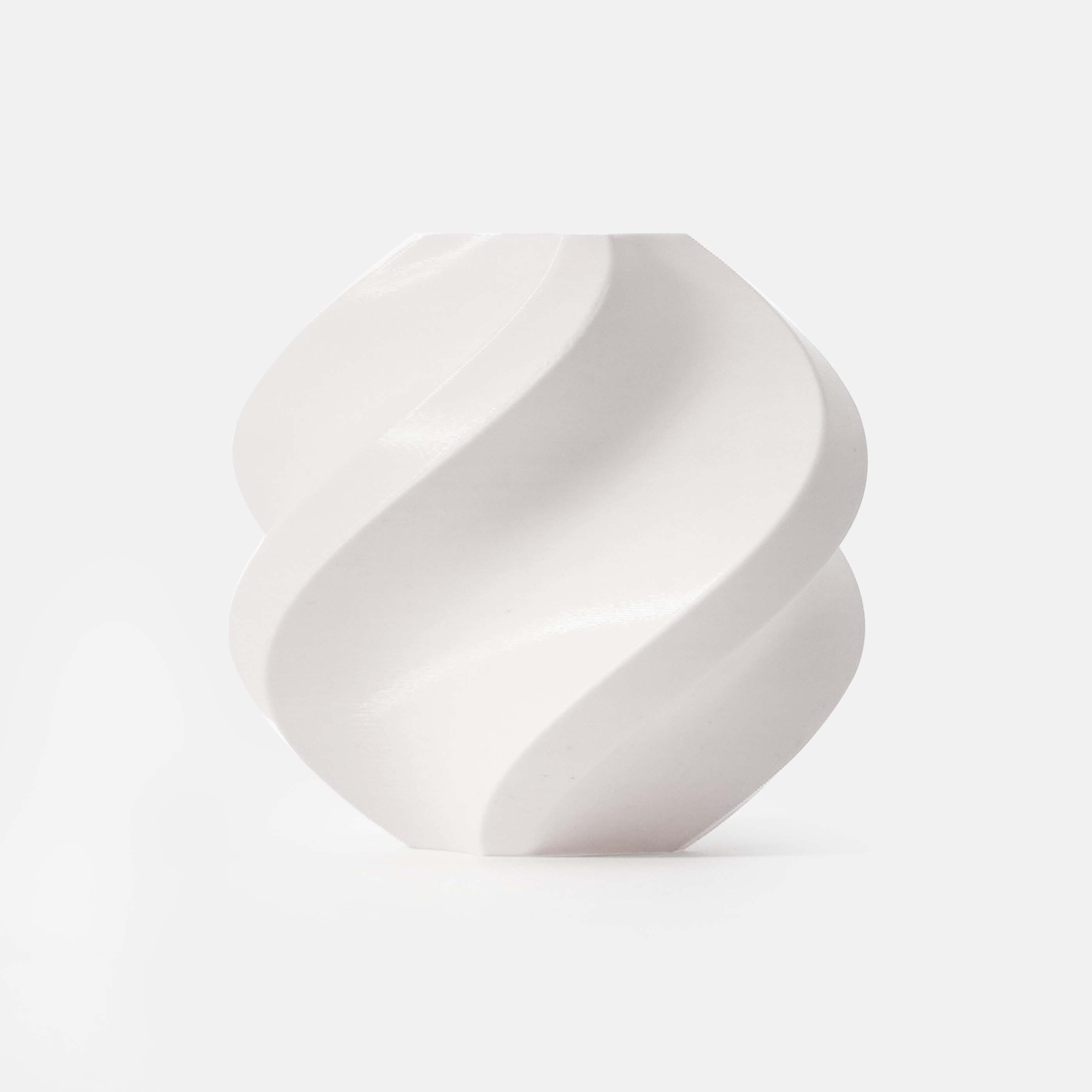
PLA filament spool PLA: Best starting point for easy indoor parts Choose PLA when you want the easiest, lowest-risk option for prototypes, display parts, shop helpers, and general indoor use.
Colors: Black, White Ease: Very easy Heat: Low
Best for
  • Visual prototypes and concept models
  • Indoor fixtures, jigs, organizers, and brackets
  • Fast, economical parts when heat resistance is not critical
Not ideal for
  • Hot car interiors or sun-exposed outdoor use
  • Parts that need to flex repeatedly without cracking
  • Higher-heat mechanical environments
View PLA part specs
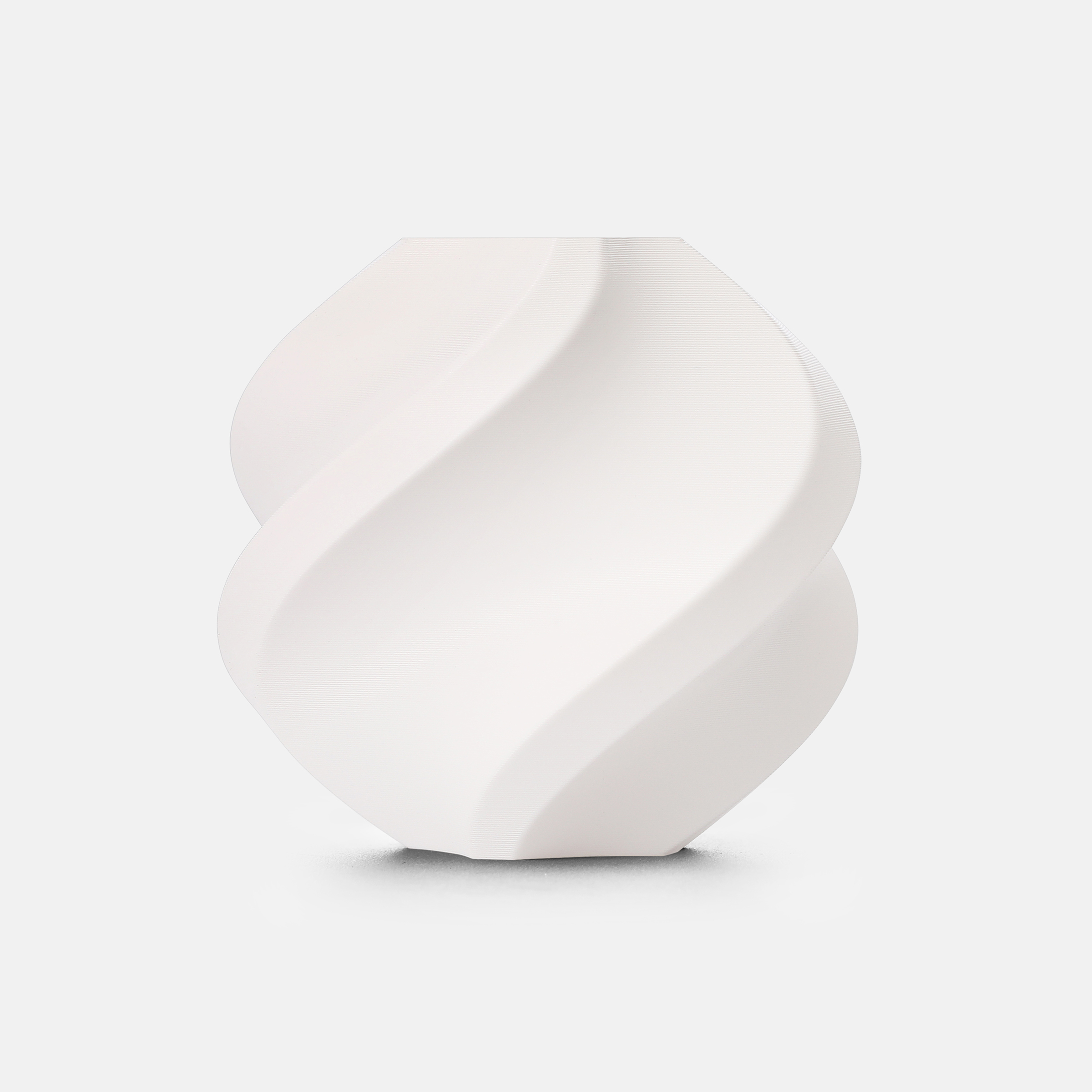
PETG filament spool PETG: Best all-around upgrade for tougher everyday parts Choose PETG when you need a more durable, water-resistant, and weather-resistant part than PLA without moving into carbon-fiber materials.
Colors: Black, White Ease: Easy to moderate Heat: Moderate
Best for
  • Functional parts that need better toughness than PLA
  • Outdoor or utility parts exposed to water and weather
  • General-use brackets, mounts, covers, and enclosures
Not ideal for
  • Projects where maximum stiffness matters more than toughness
  • Very high-heat environments
  • Parts where the easiest beginner printing behavior is the top priority
View PETG part specs
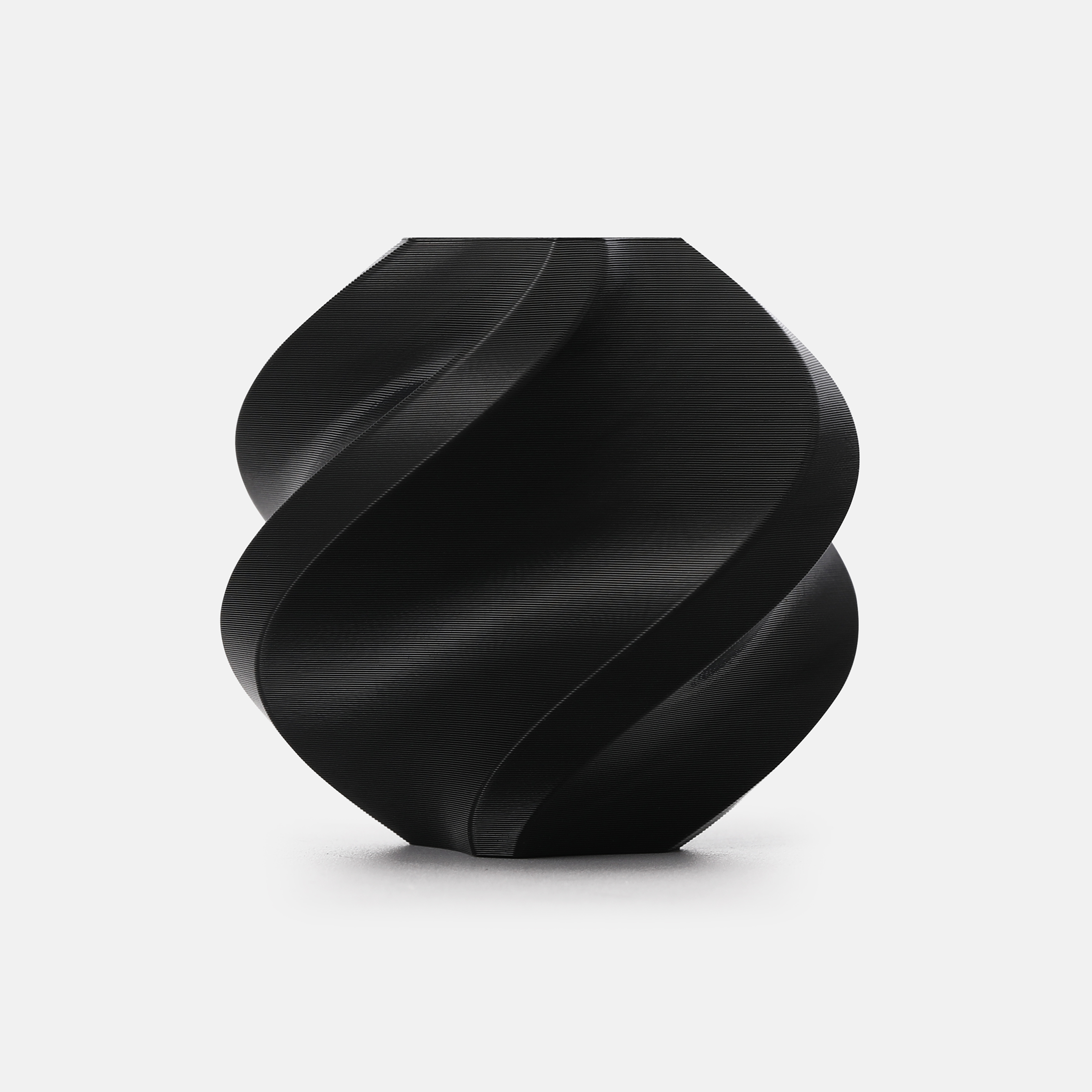
PETG-CF filament spool PETG-CF: Best for stiffer matte functional parts Choose PETG-CF when you want a stiffer, more dimensionally stable part with a matte carbon-fiber look and better wear resistance than standard PETG.
Colors: Black Ease: Moderate Heat: Moderate
Best for
  • Stiff brackets, jigs, tool holders, and structural parts
  • Applications that benefit from better dimensional stability
  • Parts where a matte, technical finish is desirable
Not ideal for
  • Users who need the simplest beginner material choice
  • Parts that need a lot of flex or ductility
  • Designs with very fine passages that are more clog-prone with filled materials
View PETG-CF part specs
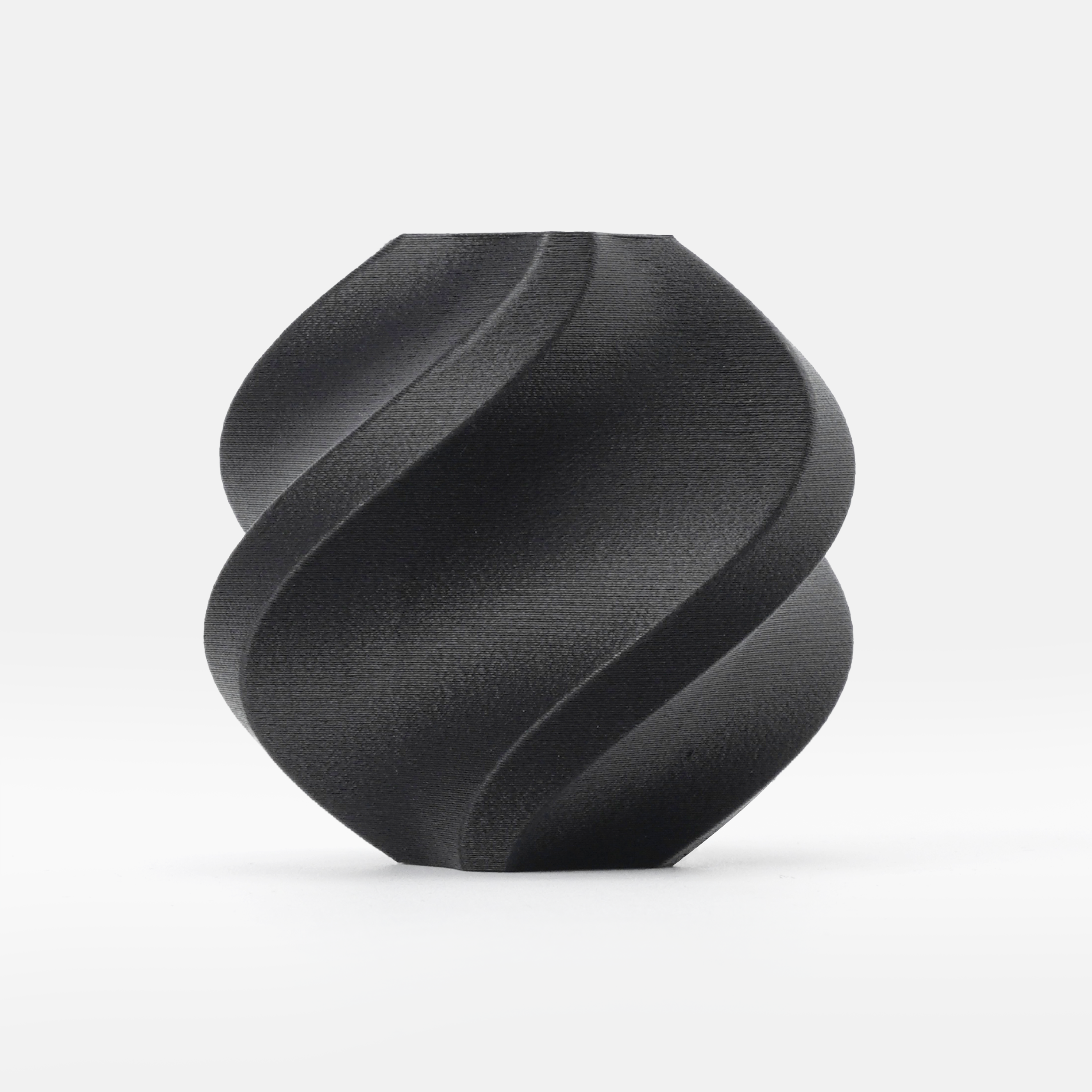
PET-CF filament spool PET-CF: Best for higher-stiffness engineering parts and more heat Choose PET-CF when stiffness, dimensional stability, and better heat performance matter more than ease of printing or ductility.
Colors: Black Ease: Advanced Heat: High
Best for
  • Engineering-style brackets, frames, and machine components
  • Parts that benefit from low warping and strong dimensional stability
  • Applications needing higher stiffness or better heat performance
Not ideal for
  • Beginners who just need a simple all-purpose material
  • Parts that need to flex or absorb impact repeatedly
  • Designs that cannot tolerate the extra brittleness of carbon-filled material

View PET-CF part specs

How to use this page

Pick quickly or go deep

Need a simple recommendation? Use the quick chooser above and focus on part use case, toughness, heat needs, and finish style.
Need the engineering details? Scroll into the property tables for tensile strength, heat performance, stiffness, and process guidance.
Need help with part design too? Visit the design guide for tolerances, clearances, wall thickness, and design-for-printing rules.

Material details

PLA for custom parts

Ease: Very easy Toughness: Moderate Heat: Low
PLA filament spool

Choose PLA when you want the easiest, lowest-risk option for prototypes, display parts, shop helpers, and general indoor use.

Use this when
  • Visual prototypes and concept models
  • Indoor fixtures, jigs, organizers, and brackets
  • Fast, economical parts when heat resistance is not critical
Avoid this when
  • Hot car interiors or sun-exposed outdoor use
  • Parts that need to flex repeatedly without cracking
  • Higher-heat mechanical environments
Available colors Black, White
Typical finish Clean, crisp detail
Property Value
Density 1.21 g/cm3
Tensile strength 53.4 MPa
Elongation at break 20.3%
Flexural strength 81.8 MPa
Flexural modulus 2740 MPa
Impact strength 19.8 kJ/m2 (Izod notched)
Heat deflection temperature 53.8 C
Vicat softening temperature 54 C
Melting point 164 C
Nozzle temperature 195-205 C at 50-100 mm/s; 205-220 C at 100-300 mm/s
Bed temperature 50-60 C
Drying guidance 50 C
Filament dimensional tolerance 1.75 mm filament, +/- 0.02 mm

Material details

PETG for custom parts

Ease: Easy to moderate Toughness: High Heat: Moderate
PETG filament spool

Choose PETG when you need a more durable, water-resistant, and weather-resistant part than PLA without moving into carbon-fiber materials.

Use this when
  • Functional parts that need better toughness than PLA
  • Outdoor or utility parts exposed to water and weather
  • General-use brackets, mounts, covers, and enclosures
Avoid this when
  • Projects where maximum stiffness matters more than toughness
  • Very high-heat environments
  • Parts where the easiest beginner printing behavior is the top priority
Available colors Black, White
Typical finish Slightly glossier, durable finish
Property Value
Density 1.29 g/cm3
Tensile strength 42 +/- 2 MPa
Elongation at break 8.9% +/- 1.5%
Flexural strength 68 +/- 2 MPa
Flexural modulus 2097 +/- 173 MPa
Impact strength 87.6 +/- 4.2 kJ/m2
Heat deflection temperature 72 C
Vicat softening temperature 70 C
Melting point 216 C
Nozzle temperature 240-270 C
Bed temperature 65-70 C
Drying guidance 60 +/- 5 C for 8 hours
Recommended print speed < 600 mm/s
Filament dimensional tolerance +/- 0.02 mm

Material details

PETG-CF for custom parts

Ease: Moderate Toughness: Moderate to high Heat: Moderate
PETG-CF filament spool

Choose PETG-CF when you want a stiffer, more dimensionally stable part with a matte carbon-fiber look and better wear resistance than standard PETG.

Use this when
  • Stiff brackets, jigs, tool holders, and structural parts
  • Applications that benefit from better dimensional stability
  • Parts where a matte, technical finish is desirable
Avoid this when
  • Users who need the simplest beginner material choice
  • Parts that need a lot of flex or ductility
  • Designs with very fine passages that are more clog-prone with filled materials
Available colors Black
Typical finish Matte carbon-fiber texture
Property Value
Density 1.29 g/cm3
Tensile strength 41 +/- 8 MPa
Elongation at break 9.6% +/- 1.0%
Flexural strength 75 +/- 2 MPa
Flexural modulus 3040 +/- 21 MPa
Impact strength 70.7 +/- 6.2 kJ/m2
Heat deflection temperature 74 C
Vicat softening temperature 83 C
Melting point 226 C
Nozzle temperature 240-270 C
Bed temperature 65-75 C
Drying guidance 60 +/- 5 C before printing; 70 C for 8 hours for best quality
Recommended print speed < 220 mm/s
Nozzle note 0.4 / 0.6 / 0.8 mm hardened steel nozzle recommended; 0.2 mm not compatible

Material details

PET-CF for custom parts

Ease: Advanced Toughness: Moderate Heat: High
PET-CF filament spool

Choose PET-CF when stiffness, dimensional stability, and better heat performance matter more than ease of printing or ductility.

Use this when
  • Engineering-style brackets, frames, and machine components
  • Parts that benefit from low warping and strong dimensional stability
  • Applications needing higher stiffness or better heat performance
Avoid this when
  • Beginners who just need a simple all-purpose material
  • Parts that need to flex or absorb impact repeatedly
  • Designs that cannot tolerate the extra brittleness of carbon-filled material
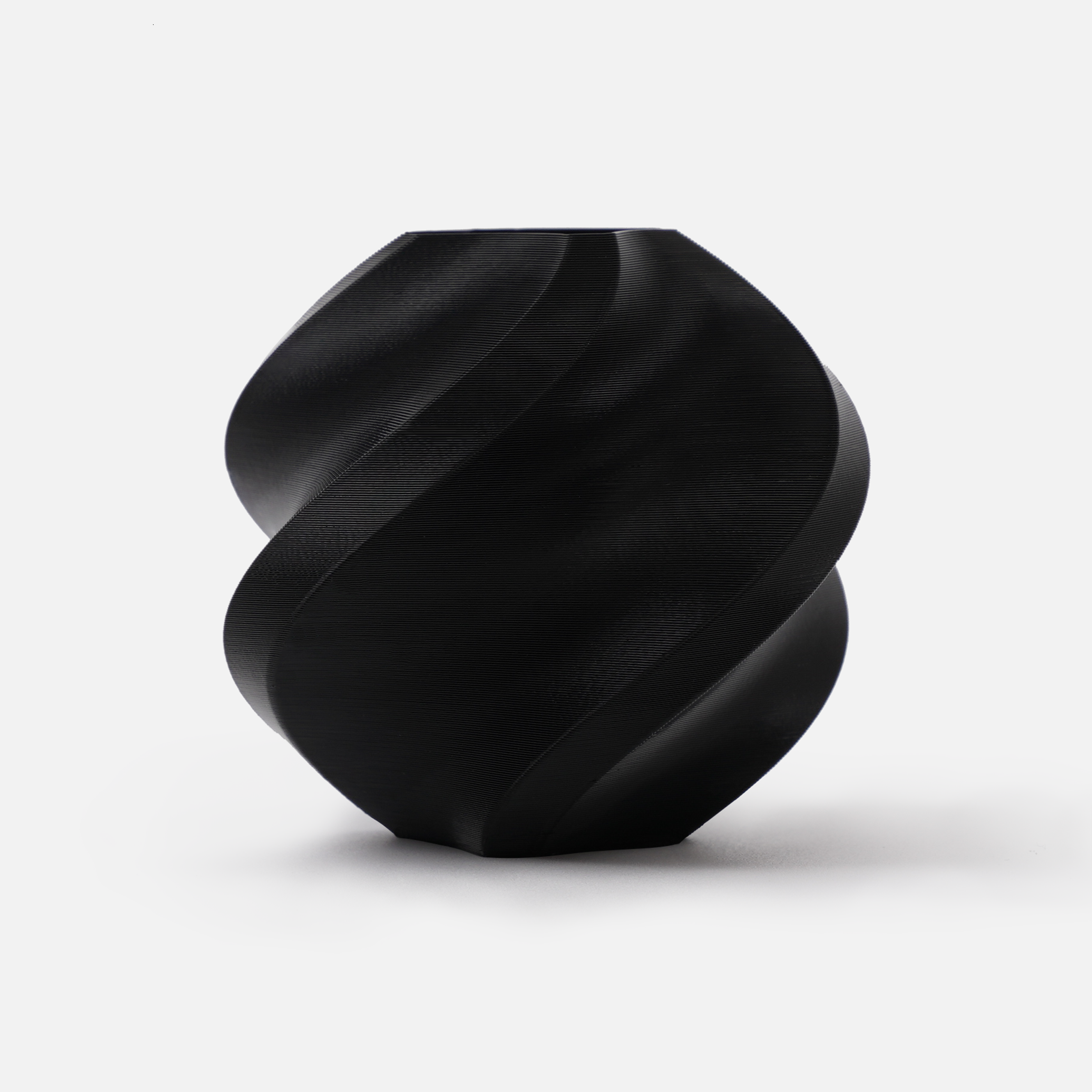
Available colors Black
Typical finish Matte engineering finish
Property Value
Density 1.30 g/cm3
Composition PET with 15% carbon fiber
Tensile strength (XY) 74 MPa unannealed; 73 MPa annealed
Tensile strength (Z) 35 MPa unannealed
Young's modulus (XY) 5950 MPa unannealed; 6700 MPa annealed
Young's modulus (Z) 3400 MPa unannealed
Elongation at break (XY) 2.5% unannealed; 1.5% annealed
Elongation at break (Z) 1.15% unannealed
Charpy impact strength 9 kJ/m2 unannealed; 4.8 kJ/m2 annealed
Flexural strength 116 MPa unannealed; 115 MPa annealed
Flexural modulus 5600 MPa unannealed; 5900 MPa annealed
Vicat softening temperature 220 C
Glass transition temperature 80 C
Izod impact 36 kJ/m
HDT at 1.8 MPa 76.6 C unannealed; 118 C annealed
HDT at 0.45 MPa 86.7 C unannealed; 176 C annealed
Melting point 250 C
Water absorption 0.5%
Nozzle temperature 280-320 C
Bed temperature 60-80 C
Drying guidance 90 C for 4-6 hours if moisture is present
Nozzle note 0.4-1.0 mm hardened steel or better; 0.6 mm or larger recommended for higher-speed printing
Filament dimensional tolerance 1.75 +/- 0.02 mm

Next step

Ready to turn the material choice into an order?